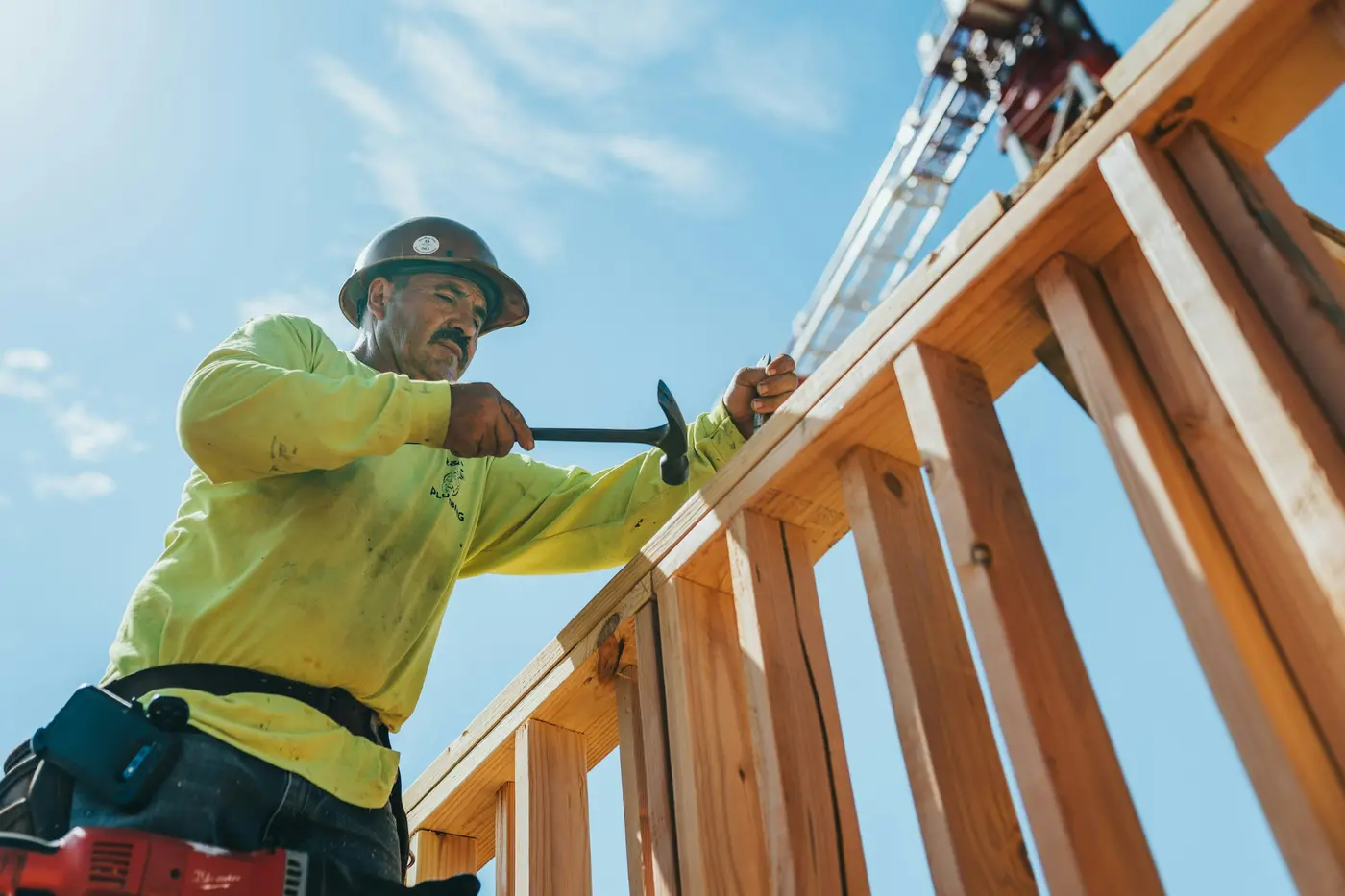
How to get a construction job with no experience
By the Steady Ground team ·
Need work soon? Construction is one of the fastest ways in. You don't need a degree. You don't need a license. And yes, you can get a construction job with no experience. Most helpers learn on the job. Here's how to land your first one.
What a helper does
As a helper, you're the extra pair of hands on the crew. You carry materials. You clean the site. You dig. You set up scaffolding. You help skilled workers with whatever they need.
Pay attention and work hard, and they'll start asking you to do more. That's how you learn.
Step 1: Get the basics ready
- Boots, gloves and a few hand tools. Plan on under $200. Ask what the job needs first. Some employers give you gear.
- A driver's license, if you have one. Some employers want it.
- A way to get to the site early. Days often start early in the morning.
If you're under 18, there are limits. Federal rules keep you off roofs, out of trenches deeper than 4 feet and away from some power tools. An approved program can be an exception.
Step 2: Take free training
Home Depot runs a free program called Path to Pro. Its basic skills class takes about an hour. If you're 18 or older, you can also make a free profile that local contractors can search. It's not a job offer, so keep looking on your own too.
Step 3: Think about an OSHA-10 card
OSHA-10 is a basic safety course. The federal government doesn't require it. But some states, cities and employers do. Even when it's not required, it can help you stand out.
Step 4: Go where the work is
- Call local companies. Try builders, roofers, concrete crews and landscapers.
- Try temp agencies that send workers to construction sites.
- Check your local Laborers' union. It's called LiUNA.
- Show up early. Go to an active job site in the morning. Politely ask for the foreman. This old-school way can still work.
Never pay anyone to find you a construction job. Honest employers don't charge for a job.
Step 5: Ask these questions on day one
- What is my hourly pay?
- How does overtime work?
- Am I an employee or a contractor?
- What do I do if I get hurt?
Then keep a record of your hours in your phone. If your paycheck ever comes up short, that's your proof.
The employee question matters. The U.S. Department of Labor says some bosses treat workers as contractors in a way that costs them minimum wage and overtime. If your boss sets your hours and tells you how to work, you may really be an employee. Ask for your status in writing.
Stay safe out there
Construction is risky work. The U.S. Bureau of Labor Statistics says laborers and helpers have one of the highest injury rates of any job. Falls and getting hit by things are some of the main dangers.
You have the right to speak up. If you're told to work up high with no protection, or in a trench with no support, say something. No day's pay is worth a serious injury.
What you'll earn
The median pay for construction laborers and helpers is $46,680 a year, or about $22.44 an hour. Your first job may pay closer to the bottom 10%, which is about $34,820 a year or less.
The biggest raises usually come from moving into a skilled trade, or learning to run equipment. Ask your boss early what it would take.
Use the job to find your trade
Here's the smart move. Treat your helper job as a tryout. After a few months, you'll know what you like. Maybe it's wiring. Maybe it's pipes. Maybe it's wood.
Then apply for a paid apprenticeship in that trade. A good word from your foreman can help. Read about electrician and plumber apprenticeships to see how that works.
For the full picture, see our construction helper guide. Need money even faster? Check our list of ways to earn money this month.
Quick answers
Can you get a construction job with no experience?
Yes. The U.S. Bureau of Labor Statistics says laborers usually don't need formal education, and training is short and on the job.
Do you need an OSHA-10 card to work construction?
Federal OSHA doesn't require it, but some states, cities and employers do. Ask the employers near you, and use an OSHA-approved trainer.
How much do construction helpers make?
The median for construction laborers and helpers is about $22.44 an hour. New helpers often start lower.
Where these facts come from
We checked these sources when we wrote this post. Rules and fees change, so check them before you pay for anything.
- U.S. Bureau of Labor Statistics: construction laborers and helpers (opens in a new tab)
- OSHA: card facts and fraud (opens in a new tab)
- Path to Pro: FAQ (opens in a new tab)
- U.S. Department of Labor: rules for workers under 18 (opens in a new tab)
- U.S. Department of Labor: misclassification (opens in a new tab)